TL;DR: Recruiting and retaining real estate agents in 2026 takes more than compensation alone. Brokerages need a clear value proposition, strong support, and scalable marketing systems that help agents win listings and stay productive. The brokerages that stand out make agent success easier, faster, and more consistent.
The 2026 real estate industry is highly competitive. In this environment, recruiting real estate agents and retaining them is a high-stakes challenge.
Success is not a matter of luck. It comes from using better strategies, stronger positioning, and the right tools. Because let’s face it: why should a real estate agent choose your brokerage?
Competitive splits, commissions, and benefits are still important.
But today, you also need a clear go-to-market strategy that shows agents what support they will actually get and how your brokerage helps them grow.
That’s why we put together this practical guide to recruiting real estate agents. We’ll also share useful facts and benchmarks at the end—but no peeking. Let’s begin.
Understanding the Landscape
 Source
In 2026, agent recruitment starts with understanding how the market is changing. Let’s break this down into three practical steps:
1. Understand Market Trends and Showcase Your Knowledge
To recruit experienced real estate agents, you need to stay current on market trends. Without real industry knowledge, it is difficult to speak credibly about opportunities, risks, and best practices.
Experienced agents can tell when a brokerage is out of touch. That can make them hesitant to join.
So, stay updated on:
- Property Demand. Which property types are moving in your market? Condos, single-family homes, luxury listings, rentals, or commercial spaces?
- Pricing Trends. Are prices rising, stabilizing, or correcting in your target areas?
- Market Regulations. Follow NAR and regional authorities for legal and compliance updates.
- Changing Trends. Track major shifts such as sustainability, affordability, and demand for properties that support flexible or remote work.
Once you understand property demand, pricing, and broader industry changes, use that knowledge to strengthen your recruiting message.
- Use your market insights to tailor your recruiting strategy. For example, if your market is strong in single-family homes or luxury listings, show agents how your brokerage supports that niche.
- Knowing whether it is a buyer’s market or a seller’s market matters. Highlight your ability to help agents succeed in current conditions.
- Your understanding of regulations also signals professionalism. Show recruits that your brokerage values legal compliance and ethical business practices.
- Demonstrate that your brokerage adapts to new market demands and changing client expectations.
- Finally, reflect your industry knowledge in job descriptions, recruiting materials, and interviews. This signals that you are serious about growth and looking for agents who are equally serious.
2. Show Openness to Emerging Technologies
Your knowledge should also extend to:
- Industry news and updates
- Real estate best practices (PS: Xara’s free blog resource covers practical real estate topics regularly, so it’s a useful place to stay informed.)
Potential recruits should not just hear that you value innovation. They should understand exactly how your brokerage supports it. Make sure to highlight your:
- Tech-Driven Approach. If your brokerage invests in modern technology, say so clearly. Talk about the systems, training, and support you provide.
- Digital Marketing. Show agents how you use digital marketing, social media, and automated listing promotion to attract more buyers and sellers. Ask whether they are ready to work with modern systems that help them move faster.
Pro Tip: Create a short recruiting video that explains your brokerage’s story, support model, and ideal agent profile. It can help prospects understand your culture before the first conversation.
Want to Recruit Top Real Estate Agents? Craft a Winning Recruiting Strategy
Recruiting top-tier real estate agents to build a strong team is the goal. To make it happen, you need a clear strategy.
So, we’ve put together a simple master checklist to improve your recruiting efforts. In other words, the framework is here. Now it is time to execute it.
Let’s break down the essential pieces step by step:
Step #1: Define Your Brand
 Source
Your brokerage’s brand is like its fingerprint—distinct and easy to recognize. It is often the first thing potential agents notice, and it should communicate value immediately.
When crafting your brand identity, keep these points in mind:
- Core Values. Do you stand for innovation, transparency, agent support, or client-first service? Your values should reflect how your brokerage actually operates.
- Mission and Vision. Create a clear mission statement that explains your brokerage’s purpose and direction. Keep it practical, memorable, and believable.
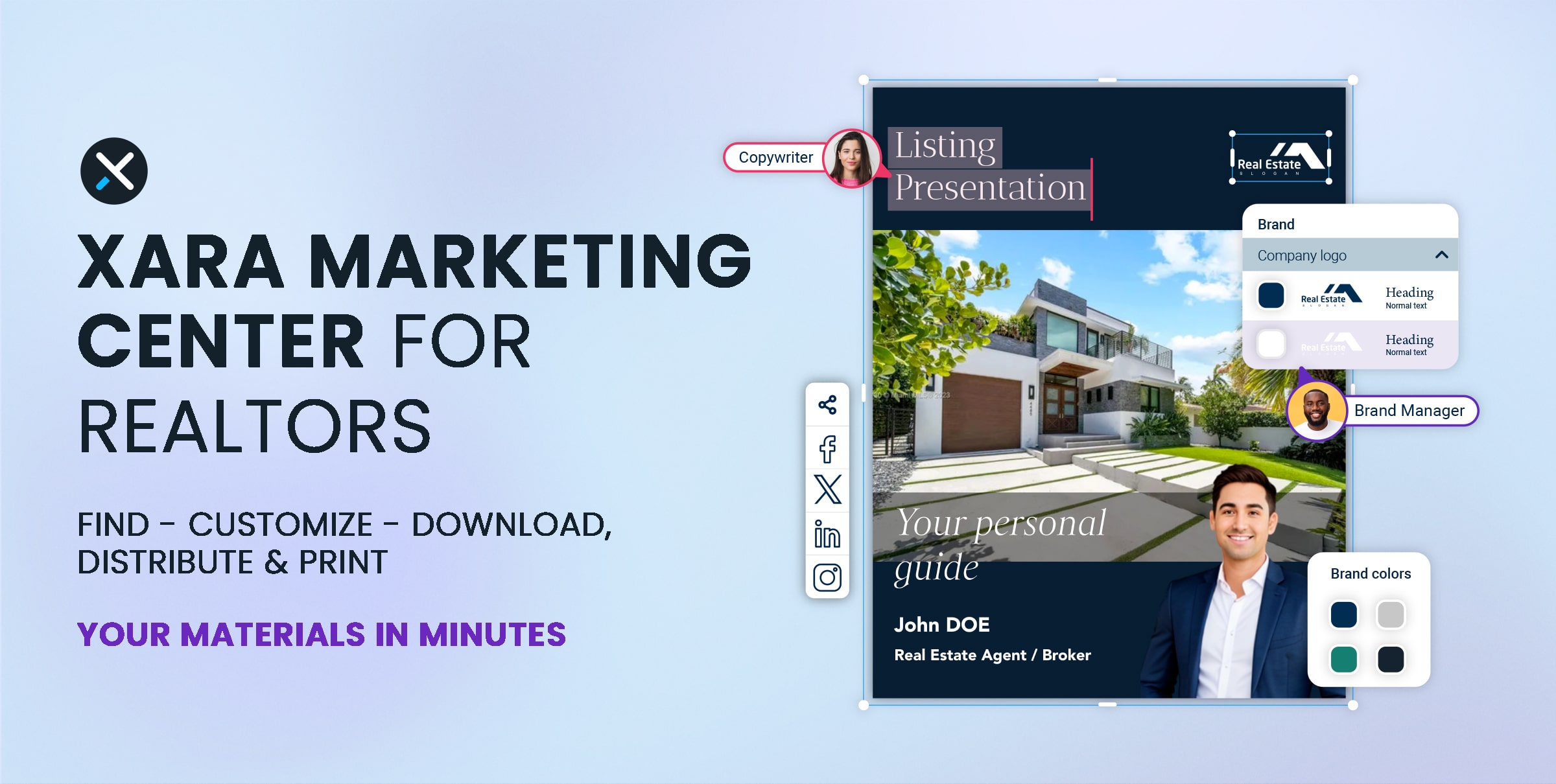
When defining your brand, focus on systems that help you stay consistent across recruiting and marketing. Xara helps brokerages centralize branding and automate marketing execution, making it easier to support agents at scale.
👉See how Xara helps brokerages automate branded marketing.
Step #2: Create Branded Content and Promote Your Brokerage to Potential Hires
Here’s how to create a strong brand presence for your real estate business in five simple steps with Xara:
- Upload Your Assets. In Xara, you can upload existing brand assets such as logos, colors, and graphics, or pull brand details from your website.
- Build Branded Materials. Use Xara to create consistent recruiting and marketing materials for your brokerage, including job descriptions, recruiting collateral, and team updates.
- Highlight Your Unique Selling Points. Show what makes your brokerage worth joining. This could include your culture, agent support model, training, or marketing systems.
- Tailor Content for Different Roles. Adjust your message for experienced agents, new agents, team leaders, or broker associates. The best recruiting content feels relevant, not generic.
- Distribute and Print. Once your materials are ready, share them digitally or use them in print for recruiting events and local outreach.
Step #3: Create Compelling Job Listings for Your Ideal Real Estate Agent
Your job as a brokerage recruiter is to stand out in a sea of forgettable postings. The right agents are out there. Here’s how to get their attention:
- Be Specific. Define exactly what you want in prospective agents. That could mean strong negotiation skills, local market knowledge, or the ability to adopt new marketing systems quickly.
- Highlight the Benefits. Go beyond split and commission details. Explain how your brokerage supports agents with real resources, strong branding, and scalable marketing help.
PS: If you’re speaking to newer agents too, practical resources like onboarding materials and branded templates can help you look more prepared and professional from day one.
Step #4: Leverage Social Media
Undoubtedly, social media is one of the best ways to reach a wider audience of potential recruits. Here’s how to use it well:
- LinkedIn, Facebook, Instagram, and More. Social channels are not just for screening. They are also key places to promote your brokerage brand, success stories, and agent experience.
- Engage and Interact. Social media is about consistency and visibility. Strong visuals matter, but so does regular posting and direct engagement.
Pro Tip: Xara’s AI Social Media Manager helps brokerages keep agents visible with agent-specific social content, without adding manual work.
Step #5: Networking
 Source
Here’s how to leverage networking effectively:
- Attend Industry Events. Participate in events, conferences, and local association meetings. These are strong opportunities to meet productive agents and learn what they value.
- Professional Organizations. Join professional organizations related to real estate. These groups often offer useful networks, directories, and recruiting opportunities.
Mastering the Art of Interviewing
 Source
The interview process is a make-or-break moment. To bring the best agents on board, you need a clear and repeatable process:
1. Structured Interviews
Structured interviews are consistent and easier to compare across candidates. They use a predetermined set of questions so you can evaluate people fairly.
Here are three strong examples:
- “Describe a successful resolution of a buyer-seller disagreement. What approach did you take, and what was the result?”
- “Share an instance when you adapted to market changes. How did you adjust your strategy, and what were the outcomes?”
- “Tell us about a complex real estate deal you managed from start to finish.”
2. Behavioral Questions
Behavioral questions show how a candidate has acted in real situations. That often tells you more than hypothetical answers.
- Ask about past experiences, such as “Tell us about a time when you successfully negotiated a challenging deal. Describe the approach and the outcome.” Specific examples help you identify proven agents.
- Don’t just listen—follow up. If an answer is vague, ask for details. Active listening helps you understand how candidates actually work.
3. Bring Real-World Scenarios to the Interview
Real-world scenarios help you see how candidates think under pressure. Here’s how to use them:
- Role-Play. Give candidates hypothetical situations such as handling difficult clients, negotiating a competitive offer, or solving a listing issue.
- Case Studies. Use actual scenarios your brokerage has faced. Ask candidates how they would respond. This is one of the best ways to identify strong judgment.
Onboarding and Training
 Source
Once you recruit top agents, you need a strong onboarding and retention system to help them succeed quickly.
Comprehensive Onboarding
A strong welcome sets the tone. Here’s what to include:
- Introduction to Your Brand. Reiterate what makes your brokerage different. Emphasize your values, standards, and support model.
- Technology and Tools. Provide clear training on the tools agents will actually use, including property databases, CRM systems, and marketing support systems. You can also pair onboarding with a practical plan like a 30-60-90-day sales plan to set expectations early.
Ongoing Training
For a brokerage that wants to keep improving, ongoing training should be standard practice. Regularly provide market updates, practical coaching, and operational guidance.
Also invest in professional development. Certifications, workshops, and shared best practices help agents grow, and growth helps retention.
Work on Your Retention Strategies
 Source
Securing top agents is important, and retaining them is just as important. Here are several practical retention strategies:
- Competitive Compensation. Recognize and reward strong performance. And most importantly, keep the promises you make during recruiting.
- Recognition and Incentives. Acknowledge talented agents. Public recognition, awards, and performance-based incentives can strengthen loyalty.
- Work-Life Balance. Encourage healthy boundaries and sustainable performance. Long-term job satisfaction matters for retention.
For more ideas, see real estate agent retention and how to be a successful real estate broker.
Equip Agents with the Right Tools to Close Deals
To thrive in 2026, your brokerage needs to give agents the support they need to market listings, stay visible, and move faster. That is where Xara becomes especially valuable.
Xara–Your Go-To Marketing Solution
In a crowded market, visibility matters. But that does not mean your agents should spend hours designing flyers, writing captions, and managing every campaign manually.
If you are trying to balance priorities, reduce manual work, and help agents spend more time on clients, here is the better approach:
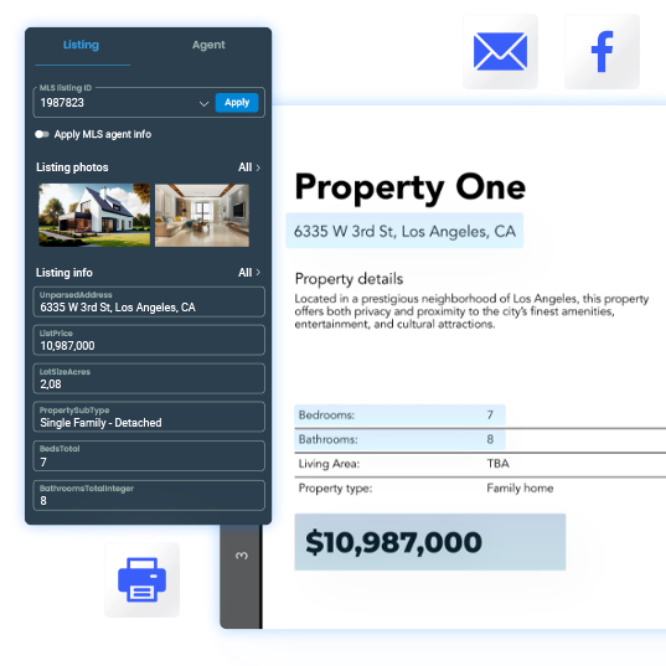
- Xara automates listing marketing for brokerages. When a property goes live or changes status, it can generate ready-to-use marketing materials automatically.
- Xara helps brokerages reduce manual marketing work by delivering branded, agent-personalized campaigns without extra staff or extra tools.
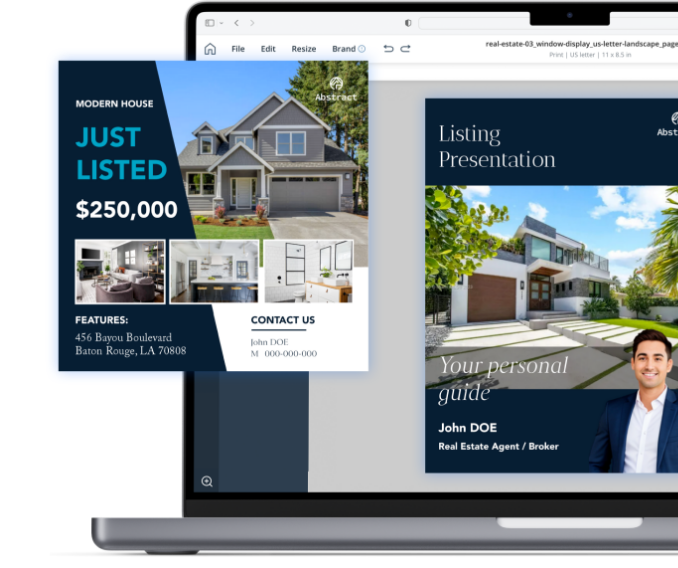
- Its automated marketing workflows support flyers, social posts, captions, and other campaign assets so agents can promote listings faster and more consistently.
- Its branding system keeps every asset polished and on-brand across the brokerage, while still personalizing content for each agent.
Xara does not just save time. It helps brokerages make sure more listings get promoted, agents stay supported, and marketing scales without adding headcount.
With less time spent on manual marketing, agents can focus on what matters most: showings, prospecting, and closing deals.
If your goals include efficiency, stronger agent support, scalable marketing, and better brand consistency,
Well…
Try Xara and empower your teamStill, Xara is one part of a broader support system. You should also consider these essential tools and practices:
- Customer Relationship Management (CRM) Systems. CRM and brokerage software help agents manage contacts, follow up with leads, and keep pipelines organized.
- Property Management Software. For agents working with rentals or managed properties, dedicated tools can streamline lease management, maintenance, and transactions.
- Continual Education and Training. Invest in training platforms and coaching so your agents keep improving over time.
Recruiting Experienced Real Estate Agents Just Got Easier
 Source
Recruiting experienced real estate agents is not easy. But with the strategies in this guide, the process becomes clearer and more effective. Let’s recap the key takeaways:
- Understand the real estate industry
- Craft a compelling brand narrative
- Improve the interviewing process
- Provide onboarding and training
- Focus on retention, too
- Equip your agents with effective tools
- Stay informed about industry trends
Ready to strengthen your brokerage value proposition?
Empower your team with Xara👉 a scalable solution for branded campaign generation, automated listing marketing, and brokerage-wide marketing consistency. 
Real Estate Recruiting – FAQs
1. How do I create a unique brand identity for my real estate brokerage?
To create a strong brand identity, define your values, positioning, and support model clearly. Then make sure your message stays consistent across recruiting, marketing, and agent materials. Xara helps brokerages keep branding consistent while automating campaign creation.
2. How do I recruit agents?
Recruiting agents involves clear positioning, compelling job listings, social media visibility, networking, structured interviews, and a support system agents can trust.
3. What are the most important KPIs to measure the success of recruitment efforts?
Key Performance Indicators (KPIs) to measure in your recruiting real estate agents efforts include:
- New Agent Retention Rates. This shows how well your brokerage keeps agents over time. Strong retention usually reflects better support and stronger culture.
- Time-to-Fill Vacancies. This measures how quickly you can fill open roles. A shorter time-to-fill usually indicates a more efficient recruiting process.
- Quality of Agents Recruited. Are new agents meeting performance expectations and aligning with your brokerage culture? This helps you judge whether your recruiting strategy is attracting the right people.
4. What makes a brokerage more attractive to experienced agents?
Experienced agents usually look for strong support, reliable lead and marketing systems, consistent branding, and a clear path to growth. Brokerages that reduce friction and help agents market listings faster tend to stand out.
5. How can marketing support improve recruiting and retention?
Marketing support helps agents win more visibility without losing time to manual work. When brokerages provide automated listing marketing and agent-ready campaigns, agents feel supported and can spend more time selling.

Book a free 1:1 coaching session with our Xara experts
Brokers, empower your team with a Marketing Center.
- Equip your sellers with marketing content on-demand.
- Unlock higher performance and productivity for brand and agent teams.
- Automate content, branding, and copywriting.



 No credit card or phone number required.